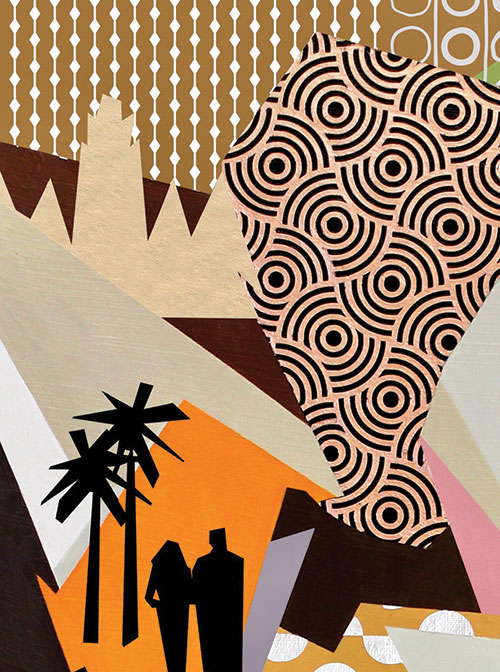
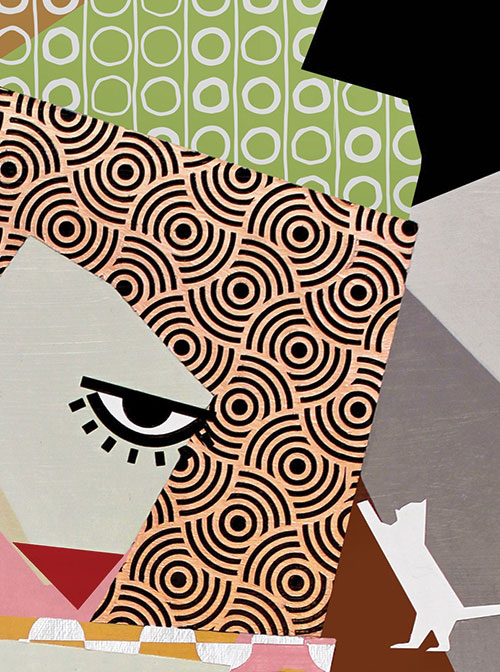

This painting explores the relationship between memory, identity, and the places we inhabit. At the centre, the stylised female figure emerges from a complex arrangement of geometric shapes, patterns, silhouettes, and fragments of everyday life. Her large, patterned form becomes both a human presence and a landscape of memories.
The intricate circular motifs surrounding her head suggest the layers and repetition of memory—thoughts and experiences that return, overlap, and transform over time. Her single expressive eye introduces a quiet sense of observation, as though she is looking inward as much as outward.
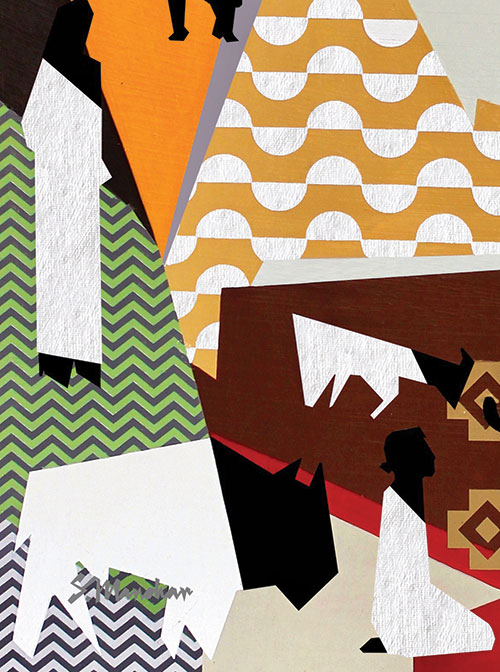
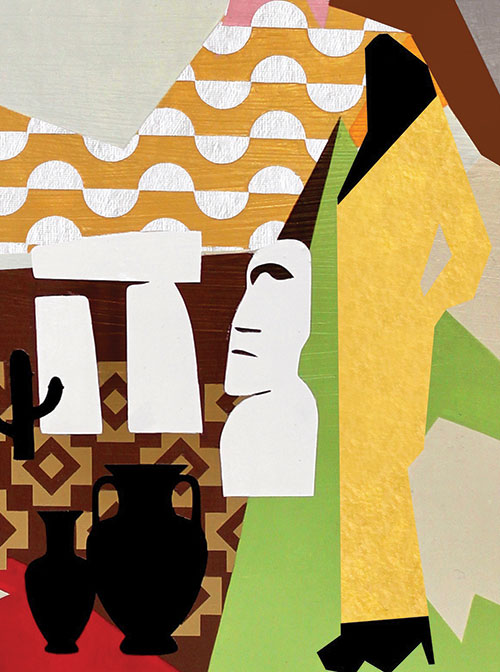
Around the central figure, small silhouettes of people, trees, animals, buildings, and domestic objects appear like fragments from different moments. They are not presented as a literal narrative, but as visual memories—partial, simplified, and sometimes disconnected. Each fragment contributes to a larger emotional landscape.
The contrasting patterns—waves, circles, zigzags, dots, and geometric forms—create a strong rhythmic quality. They represent the constant movement of life and the countless visual impressions that accumulate within us. The warm oranges, yellows, greens, and earthy tones give the painting a sense of warmth and nostalgia, while the black and white forms create moments of contrast and stillness.
The composition deliberately blurs the boundary between person and environment. The figure seems to belong to the landscape rather than simply stand within it, suggesting that our surroundings gradually become part of our identity.